
Real Time PCR Products


Applied Biosystems™ resDNASEQ™ Human Residual DNA Quantitation Kits
The resDNASEQ Human Residual DNA Quantitation Kit is a quantitative PCR (qPCR)-based system for the detection of host cell DNA from human cell lines used as expression systems for recombinant proteins.

Applied Biosystems™ resDNASEQ™ Quantitative E. coli DNA Kits
This quantitative PCR (qPCR)-based kit, part of the resDNASEQ™ E. coli Residual DNA Quantitation System, enables highly sensitive quantitation of host cell DNA from E. coli expression systems, typically in less than 4 hours.


Applied Biosystems™ resDNASEQ™ Quantitative HEK293 DNA Kits
The resDNASEQ Quantitative HEK293 DNA Kit is a quantitative PCR (qPCR)-based system for the detection of host-cell DNA from HEK293 cell lines.

Applied Biosystems™ resDNASEQ™ Quantitative Vero DNA Kits
The resDNASEQ Quantitative Vero DNA Kit is a quantitative PCR (qPCR)-based system for the detection of host cell DNA from Vero (African Green Monkey) cells, an expression system commonly used for the production of vaccines.

Applied Biosystems™ resDNASEQ™ Quantitative NS0 DNA Kits
The resDNASEQ™ Quantitative NS0 DNA Kit is a quantitative PCR (qPCR)-based system for the detection of host cell DNA from NS0 (murine myeloma) cells, an expression system commonly used for the production of vaccines.

Applied Biosystems™ resDNASEQ™ Quantitative MDCK DNA Kits
The resDNASEQ™ Quantitative MDCK DNA Kit is a quantitative PCR (qPCR)-based system for the detection of host cell DNA from MDCK (canine kidney) cells, an expression system commonly used for the production of vaccines.

Applied Biosystems™ resDNASEQ™ Quantitative Sf9 and Baculovirus DNA Kits
The resDNASEQ Quantitative Sf9 and Baculovirus DNA Kit is a duplex quantitative PCR (qPCR)-based system for the detection of residual DNA from the Sf9 baculovirus platform.

Applied Biosystems™ resDNASEQ™ Quantitative E1A DNA Fragment Length Kits
The resDNASEQ Quantitative E1A DNA Fragment Length Kit is a quantitative PCR (qPCR)-based system that measures and quantitates the fragment lengths of residual host-cell DNA by targeting the E1A gene in HEK 293 cell lines.

Applied Biosystems™ resDNASEQ™ Quantitative Pichia pastoris DNA Kits
The resDNASEQ™ Quantitative Pichia pastoris DNA Kit is a quantitative PCR (qPCR)-based system for the detection of host cell DNA from Pichia pastoris cells.

Applied Biosystems™ resDNASEQ™ Quantitative Plasmid DNA - Kanamycin Resistance Gene Kits
The resDNASEQ Quantitative Plasmid DNA - Kanamycin Resistance Gene Kit is a quantitative PCR (qPCR)-based system for the detection of residual kanamycin-resistant plasmids.

Applied Biosystems™ resDNASEQ™ dPCR CHO DNA Kit
The Applied Biosystems resDNASEQ dPCR CHO DNA Kit is a powerful digital PCR (dPCR) solution for quantitating residual DNA from CHO expression systems, which are commonly utilized for the production of monoclonal antibodies (mAbs).
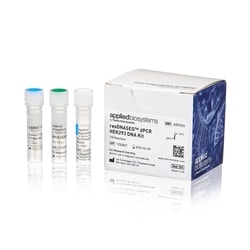
Applied Biosystems™ resDNASEQ™ dPCR HEK293 DNA Kit
The Applied Biosystems resDNASEQ dPCR HEK293 DNA Kit is a digital PCR (dPCR)-based solution to quantitate residual DNA from HEK293 expression systems, which are commonly used for production of gene therapies, cell-based vaccines, and similar therapeutics.

Applied Biosystems™ resDNASEQ™ dPCR Sf9 and Baculovirus DNA Kit
The Applied Biosystems resDNASEQ dPCR Sf9/Baculovirus DNA Kit is a digital PCR (dPCR)-based solution to quantitate residual DNA from Sf9/baculovirus expression systems, which are commonly used for production of gene therapies, cell-based vaccines, and similar therapeutics.

Applied Biosystems™ resDNASEQ™ dPCR E1A DNA Fragment Length Kit
The resDNASEQ dPCR E1A DNA Fragment Length Kit is an absolute quantitation PCR-based system that measures the fragment lengths of residual host-cell DNA by targeting the E1A gene in HEK 293 cell lines, which are predominantly used in the development of gene therapies, cell-based vaccines, and similar biotherapeutics.