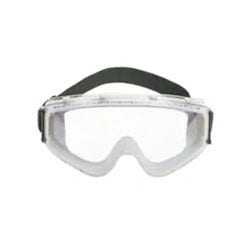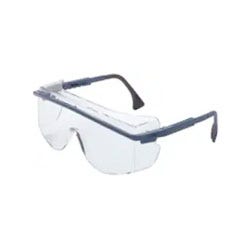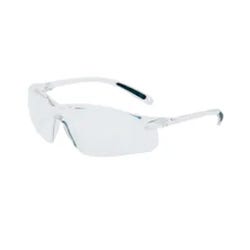
General Purpose Safety Glasses
The Occupational Safety and Health Administration (OSHA) requires that employers make appropriate eye protection available to employees if their work exposes them to hazards from flying particles, molten metal, liquid chemicals, acids or caustic liquids, chemical gases or vapors, or potentially harmful light. The OSHA eye and face protection standard is 29 CFR 1910.133.
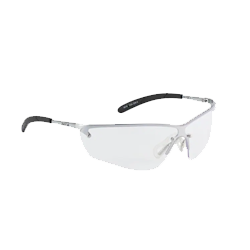
Safety glasses may also include side protection like detachable side protectors (clip-on or slide-on shields). In addition, accommodation must be made for employees who require corrective lenses. In such cases, protective eyewear must incorporate prescriptive lenses or glasses worn over prescription lenses. If light hazards exist, eye protection should have coated or tinted lenses that reduce the transmission of the specific light spectrum.


Useful Links
Save Now - Exclusive Deals

Product Code 13234094

Product Code 7160269

Product Code 8000060

Product Code 7221900

Product Code 11913584

Product Code 11857000

Product Code 7222282

Product Code 15580984

Product Code 10063770

Product Code 15819257

Product Code 8009516

Product Code 13178756
Must Haves

Product Code 10104603

Product Code 7224355

Product Code 7164940

Product Code 15457451

Product Code 15578061

Product Code 9646017

Product Code 7221897

Product Code 15831745
Complete Your Order - Great Deals

Product Code 12200493

Product Code 15382184
FAQ
To select the correct general-purpose safety glasses, consider the following key factors:
• Hazards: Identify the specific risks (impact, chemical, radiation, dust etc)
• Standards: Ensure compliance with relevant safety standards (e.g., ANSI/ISEA Z87.1, EN166)
• Lens Material: Choose based on durability and clarity (polycarbonate, Trivex etc)
• Lens Coatings: Look for anti-scratch, anti-fog, and UV protection
• Fit and Comfort: Ensure adjustable features and a comfortable fit
• Prescription Needs: Consider prescription safety glasses if necessary
• Design: Opt for wraparound designs or side shields for better protection
• Brand and cost: Select reputable brands and balance cost with required features
By focusing on these factors, you can choose safety glasses that provide adequate protection and comfort for your needs.
In Europe, the standard for general-purpose safety glasses is EN166. Key points of the EN166 standard include:
• Materials used should be durable and resistant to ageing
• Safety glasses must pass impact resistance tests, which can be categorized as:
o F: Low energy impact (45 m/s)
o B: Medium energy impact (120 m/s)
o A: High energy impact (190 m/s)
• Eyewear must provide an adequate field of vision
• Eyewear must protect against liquid droplets and splashes
• Eyewear must resist damage caused by fine particles
• Eyewear should withstand exposure to high temperatures
• Lenses must meet specific criteria for optical clarity and refractive power
• Lenses should be resistant to surface damage from fine particles
• Lenses and frames must be marked with relevant information, such as the manufacturer’s ID, optical class, and mechanical strength rating
• Lenses should provide adequate protection against ultraviolet (UV) radiation, if applicable
No, regular glasses cannot be used as safety glasses. Safety glasses are specifically designed and tested to provide protection against hazards such as impact, chemicals, and radiation, which regular glasses are not. If you need corrective lenses, consider getting prescription safety glasses or using over-the-glass (OTG) safety glasses that can be worn over your regular glasses. This ensures you have the necessary protection while also addressing your vision needs.
Resources and Related Information



Shop By Brand