missing translation for 'onlineSavingsMsg'
Learn More
Learn More
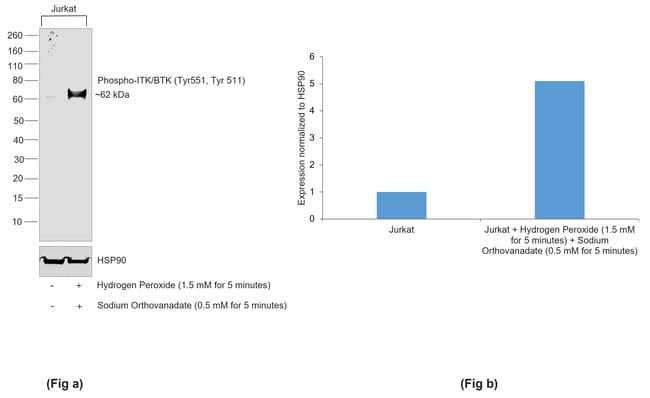
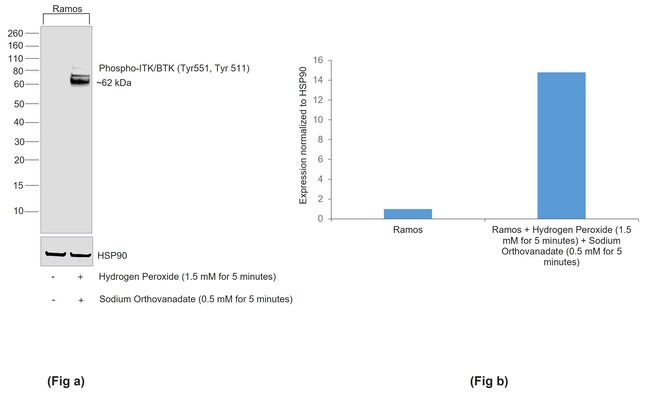
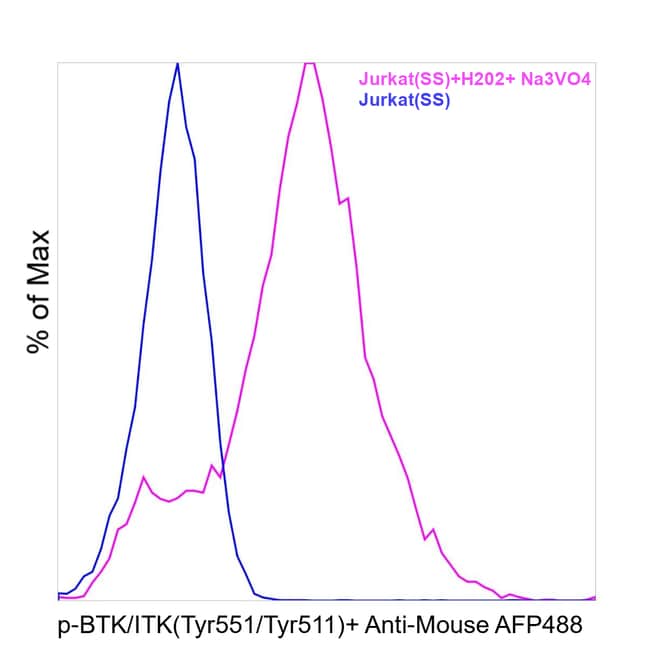
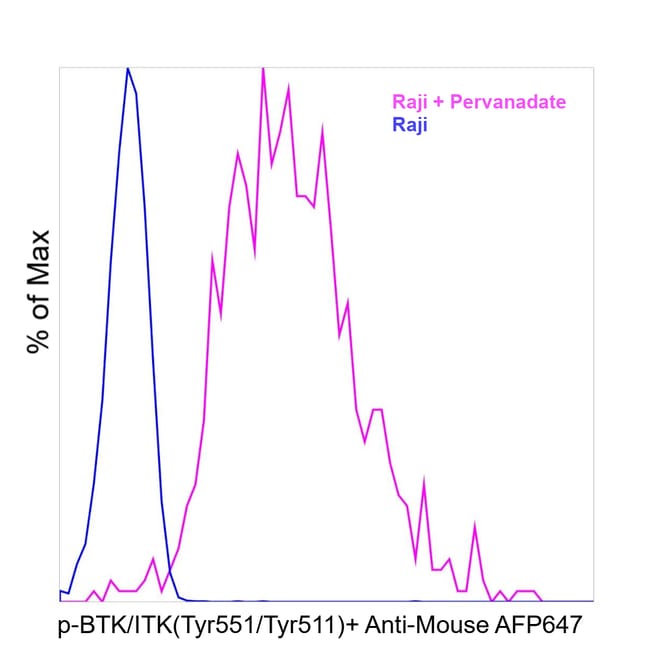
Invitrogen™ Phospho-BTK/ITK (Tyr551, Tyr511) Monoclonal Antibody (M4G3LN)
Mouse Monoclonal Antibody
Brand: Invitrogen™ 740047M
This item is not returnable.
View return policy
Description
Recombinant mouse monoclonal antibodies are produced using in vitro expression systems. Recombinant antibodies are produced using specific genes that code for the desired antibodies. These genes are cloned into an expression vector and expressed in vitro. The advantages of recombinant antibodies include: better specificity, lot-to-lot consistency, and broader immunoreactivity to diverse targets due to a larger rabbit immune repertoire. It is recommended that the antibody be carefully titrated for optimal performance in the assay of interest.
In addition to Src family and SYK family kinases, B cells and T cells express a third family of receptor-proximal kinases called the Tec kinase family. The B cell-specific Tec family kinase is BTK; T cells express ITK as well as Tec and Rlk. Tec family kinases play an indispensable role in activation of phospholipase C and activation of calcium-dependent signaling cascades following antigen receptor triggering. BTK has been implicated in propagating signals downstream of LPS-TLR4 in B cells via signaling through the TLR4 co-receptor RP105/CD180. Mice congenitally lacking BTK or ITK show profound defects in B cell or T cell development and signaling, respectively. People with mutations or deletions in BTK suffer from X-linked agammaglobulinemia and X-linked immunodeficiency.
Specifications
| Phospho-BTK/ITK (Tyr551, Tyr511) | |
| Monoclonal | |
| 1.0 mg/mL | |
| PBS with 0.09% sodium azide; pH 7.4 | |
| Q06187, Q08881 | |
| BTK, ITK | |
| Protein A/G | |
| RUO | |
| 3702, 695 | |
| Store at 4°C short term. For long term storage, store at -20°C, avoiding freeze/thaw cycles. | |
| Liquid |
| Flow Cytometry, Western Blot | |
| M4G3LN | |
| Unconjugated | |
| BTK | |
| agammaglobulinaemia tyrosine kinase; agammaglobulinemia tyrosine kinase; AGMX1; AI528679; AT; ATK; B-cell progenitor kinase; BPK; Bruton agammaglobulinemia tyrosine kinase; bruton tyrosine kinase; Bruton's tyrosine kinase; BTK; dominant-negative kinase-deficient Brutons tyrosine kinase; Emt; homolog of mouse T-cell itk/tsk; IL2 inducible T cell kinase; IL2 inducible T-cell kinase; IL-2-inducible T cell kinase; IL-2-inducible T-cell kinase; IL2-inducible T-cell kinase; IMD1; interleukin-2-inducible T cell kinase; interleukin-2-inducible T-cell kinase; ITK; Kinase EMB; kinase EMT; Kinase TLK; LPFS1; LYK; PSCTK1; PSCTK2; T-cell-specific kinase; Tcsk; Tlk; truncated Bruton agammaglobulinemia tyrosine kinase; Tsk; Tyrosine-protein kinase BTK; Tyrosine-protein kinase BTK (Brutons tyrosine kinase) (Agammaglobulinaemia tyrosine kinase) (ATK) (B cell progenitor kinase) (BPK) (Kinase EMB); tyrosine-protein kinase BTK isoform (lacking exon 13 to 17); tyrosine-protein kinase BTK isoform (lacking exon 14); tyrosine-protein kinase ITK/TSK; Tyrosine-protein kinase Lyk; xid; XLA; X-linked immune deficiency | |
| Mouse | |
| 100 μL | |
| Primary | |
| Human | |
| Antibody | |
| IgG2b κ |
Product Content Correction
Your input is important to us. Please complete this form to provide feedback related to the content on this product.
Product Title
Spot an opportunity for improvement?Share a Content Correction